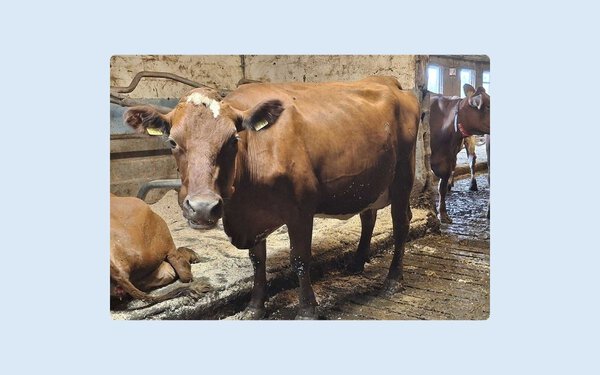
VikingRed cows: looking beyond the first lactation

Four Finnish dairy farmers explain why VikingRed cows should be assessed beyond their first lactation, highlighting health, longevity and resilience.

Four Finnish dairy farms with mixed Red Dairy Cattle (RDC) and Holstein herds share a common experience: the first lactation does not necessarily reveal the full potential of a VikingRed cow.

While production in the first lactation may be more modest, the farmers see strong performance from the second lactation onwards, together with qualities such as health, resilience, efficient forage use and longevity.

Their experiences also highlight the importance of finding the right balance in cow size and making appropriate breeding decisions.

Elina and Taneli Pajunen – Mikkeli, Finland

Elina and Taneli Pajunen have a mixed herd of roughly 50% RDC and 50% Holstein cows, milked by two robots with an average yield of 11,300 kg ECM (10,000 kg milk, 4.4% fat and 3.7% protein). They value the herd's uniformity and ease of management and are determined to retain VikingRed cows because of their excellent health.

In the first lactation, an RDC heifer may not match the production of a Holstein heifer. However, they do not judge cows based on their first lactation. In their view, a cow's true potential becomes apparent from the second lactation onwards.

They also find that medium-sized VikingRed cows perform exceptionally well in a mixed herd, as they summarize it perfectly: “RDC should not be too small, but this doesn’t mean that RDC should automatically be larger: in mixed herds the size of Holstein cows should also be kept under control!”

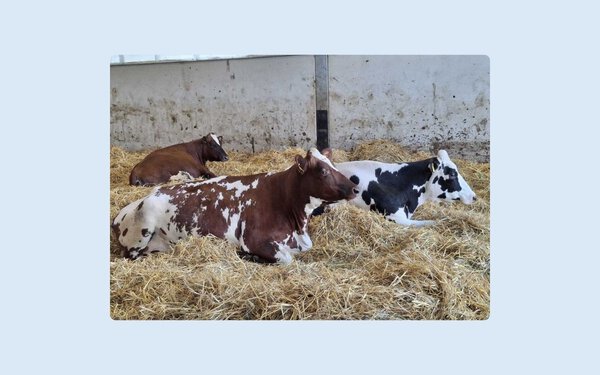
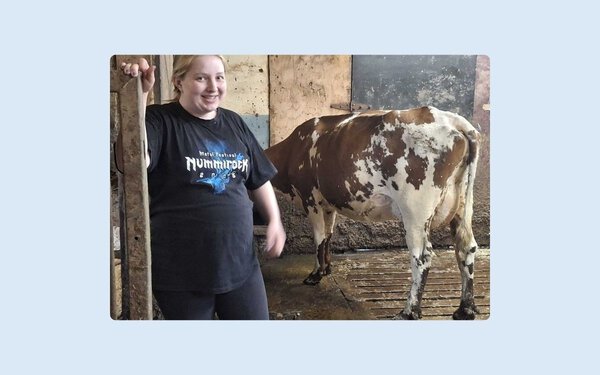
VikingRed cows in Pajunen herd, Finland

Marjukka, Are and Jere Lautiainen – Purola herd, Mikkeli, Finland

The Purola herd with 36 RDC cows has achieved an excellent level of production, 12,800 kg ECM (11,800 kg milk, 4.3% fat and 3.7% protein) based on dedicated long-term breeding and skilled cow management.

The herd owners from two generations, Marjukka, Are and Jere Lautiainen, appreciate that RDC cows are healthy and efficient users of forage.

They have seen that RDC cows are probably not the highest producers in the first lactation, but from the second lactation onwards, they reach their full potential. For the Lautiainens, this development is closely linked to longevity and makes the production pattern particularly valuable.

As they themselves so well summarize the key reason for keeping RDC cows: “Yield during the first lactation may be modest, but from the second lactation onwards it usually exceeds 10,000 kg ECM. Cows with this production pattern also tend to have a long productive lifespan.”

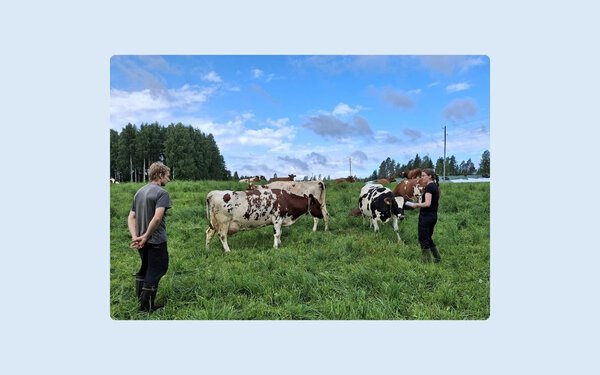
VikingGenetics cows on pasture in Purola herd, Finland

Riku Tella – Ruokolahti, Finland

Riku Tella has a mixed herd consisting of approximately equal numbers of RDC and Holstein cows. The herd is milked by one robot, with an average milk yield of 12,100 kg ECM (11,000 kg milk, 4.4% fat and 3.7% protein).

The herd’s breeding strategy is to use sexed semen on the top females and beef semen on the rest, maximising both genetic progress and the overall profitability of the herd.

Milk yield must be maintained at a sufficient level in breeding decisions to ensure that high solids can also be achieved. He sees great potential for RDC cows in mixed herds, but offers this reminder: “Be patient with first-lactation cows! The first lactation does not tell the whole story or the whole truth.”

Proof of these words can be found in one of his cows, Oikku, which has now calved five times and has produced a total of 85,000 kg ECM. After a good first-lactation performance of almost 12,000 kg ECM, she increased her production dramatically in her second lactation, reaching 15,000 kg ECM.

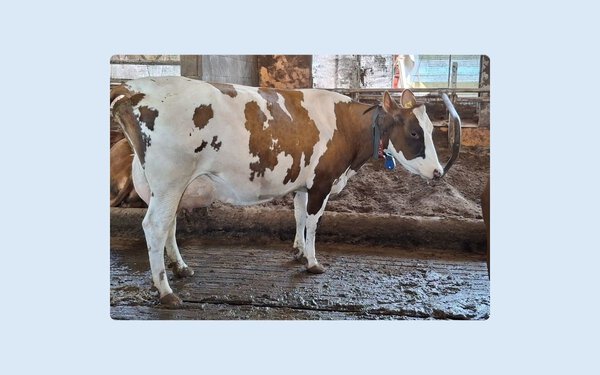
In the picture: Riku Tella and VikingRed cow Oikku (VR Hattrick x VR Vimpula), 5 calvings and 85,000 kg milk

VikingRed cow Oikku (VR Hattrick x VR Vimpula), 5 calvings and 85000 kg milk! in Riku Tella's herd, Finland

Sara Karvanen – Lappeenranta, Finland

Sara Karvanen has a mixed herd of RDC and Holstein cows, with a slightly higher proportion of RDC cows and an average yield of 11,000 kg ECM (9,700 kg milk, 4.8% fat and 3.8% protein).

Sara is a professional young farmer who has recently completed a generational transition on the farm, moving from parlour milking to an automated milking system.

Sara believes that RDC cows do not have to be large to succeed in a mixed herd, and that Holstein cows should also be selected for a more moderate size.

She is very pleased with the RDC cows' resilience and will to live. As she herself sums it up: “RDC cows do not give up when they become ill; they fight their way back to health.” 

In the picture: Oikku (VR Hattrick x VR Vimpula), 5 calvings and 85,000 kg milk

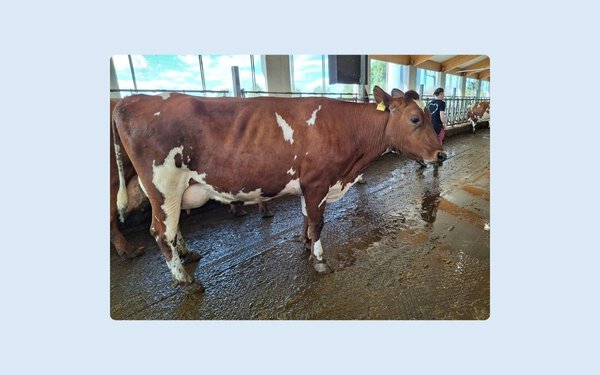
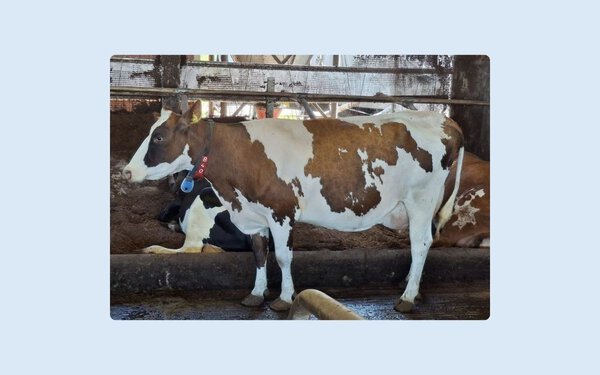
VikingRed cow Vanilja, NTM +24 (VR Bertil x VR Fitbit P) in Sara Karvanen's herd in Finland

Four farms, one long-term perspective

Although each farm has its own breeding strategy, herd structure and management system, the four cases point to the same conclusion: RDC cows should not be judged too early. Their value becomes increasingly apparent as they progress through their productive lives, with the second lactation onwards revealing qualities that first-lactation figures alone cannot capture. 

As dairy production evolves, farmers need cows that combine performance with resilience and adaptability. For nearly 50 years, the VikingRed breeding programme has focused on a clear goal: developing a balanced red dairy cow. This long-term approach has resulted in functional, reliable cows that perform well in modern production systems.

VikingRed combines the strengths of three Nordic dairy breeds: Swedish Red, Finnish Ayrshire, and Danish Red. This unique breeding collaboration delivers high genetic gain across all economically important traits, resulting in a robust, efficient cow suited to profitable and sustainable dairy production.

Backed by decades of large-scale data from commercial herds, VikingRed offers world-leading red dairy genetics. The breed is known for strong health and fertility, moderate size, excellent feed efficiency, and high solids production. Together, these traits support profitability, lower climate impact, and high animal welfare.

Discover VikingRed
VikingRed cows on pasture in Finland

VikingRed in Finland

Elina and Taneli Pajunen, Finland

Elina and Taneli Pajunen, Finland

Cows in the herd of Elina and Taneli Pajunen, Finland

Discover VikingRed
Elina and Taneli Pajunen, Finland

Elina and Taneli Pajunen, Finland

VikingRed cow in the herd of Elina and Taneli Pajunen, Finland

Discover VikingRed
Elina and Taneli Pajunen, Finland

Elina and Taneli Pajunen, Finland

VikingRed daughter in the herd of Elina and Taneli Pajunen, Finland

Discover VikingRed
Purola herd, Finland

Purola herd, Finland

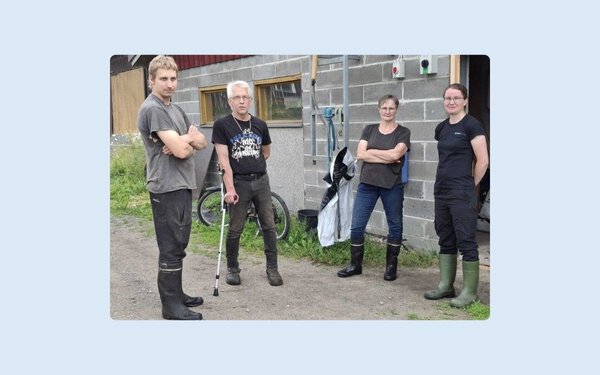
Marjukka, Are and Jere Lautiainen

Discover VikingRed
Purola herd, Finland

Purola herd, Finland

Cows on pasture in Purola herd, Finland

Discover VikingRed
VikingRed daughter in Riku Tella's herd

VikingRed daughter in Riku Tella's herd

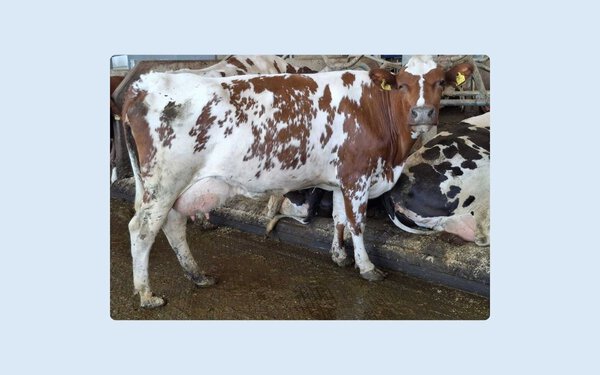
Ulina NTM +21 (VR Uppura x VR Vilperi) and 9600 ECM in 1st lactation

Discover VikingRed
VikingRed daughter in Riku Tella's herd

VikingRed daughter in Riku Tella's herd

Ulina NTM +21 (VR Uppura x VR Vilperi)and 9600 ECM in 1st lactation

Discover VikingRed
Sara Karvanen, Finland

Sara Karvanen, Finland

VikingRed daughter in the herd of Sara Karvanen, Finland

Discover VikingRed
VikingRed daughter in Sara Karvanen's herd, Finland

VikingRed daughter in Sara Karvanen's herd, Finland

Vuokko NTM +6 (VR Furat P x VR Loke)

Discover VikingRed
Breed the cows of the future Explore the benefits of VikingRed
Farmer hand on VikingRed cow
Sign up for our Newsletter Subscribe now